Home › Places › Portuguese Settlement
The Portuguese Settlement, Ayutthaya: from a camp that fell to a new community at Thonburi
The Portuguese Settlement, south of Ayutthaya's city island, was the oldest European community of Ayutthaya. In the war of the second fall the Portuguese were called on to help defend the city. Their camp fell about two weeks before the city did. Some Portuguese soldiers served in King Taksin's army, and after he founded Thonburi he granted the Portuguese land for a new community on the Chao Phraya River, which survives to this day as the Kudi Chin quarter.
This place through the periods
The community of the Portuguese and their descendants, here since the reign of King Chairacha, with churches of the Dominicans, the Jesuits and the Franciscans. Portuguese soldiers served as musketeers for Ayutthaya.
During the Burmese siege the Portuguese were called on to help defend the city. The camp at the Portuguese settlement fell on 21 March 1767, and on 23 March the Burmese burned the churches of São Domingos, São Paulo and St Joseph.
After the fall the Portuguese were carried off or scattered. A Portuguese study states that about 79 Portuguese soldiers were in King Taksin's army in 1767–1768.
In the Thonburi years King Taksin granted land on the Chao Phraya River to the Portuguese who had helped in the fighting, for a new community, which later became the Kudi Chin quarter and Santa Cruz Church in Bangkok. The old village at Ayutthaya was abandoned.
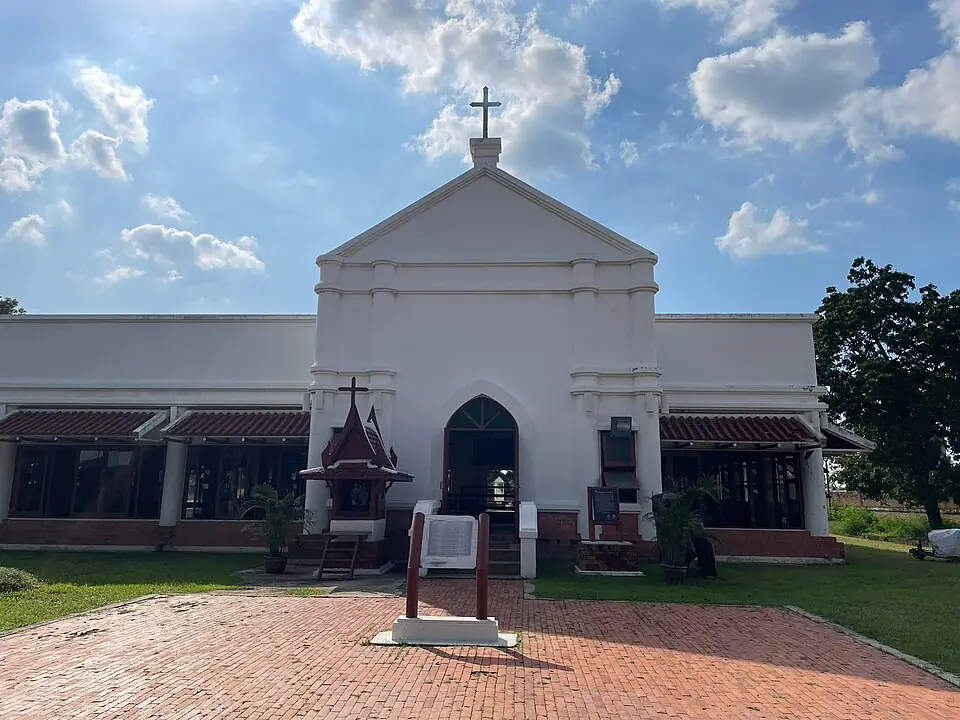
You can see the ruins of the Dominican church (St Peter's) and the burial ground where more than 200 skeletons were excavated, under a protective building.
The Portuguese musketeers
The Portuguese came to Ayutthaya from the early 16th century, and were granted land south of the city in the reign of King Chairacha. Portuguese soldiers served as musketeers and gunners. The community had churches of several religious orders, and several generations of descendants born in Ayutthaya spoke Thai and were in royal service.
March 1767: the Portuguese camp falls
In December 1766 the court called on the Portuguese, along with the Chinese, to help defend the city. The Burmese took the camps south of the city one at a time. The Chinese camp at Khlong Suan Phlu fell in mid-March. The camp at the Portuguese settlement fell on 21 March 1767, and two days later the Burmese burned the churches of São Domingos, São Paulo and St Joseph. About two weeks later the city fell.
The Ayutthaya Historical Research website, citing a Portuguese study of 1983, says about 79 Portuguese soldiers were in King Taksin's army in 1767–1768. Some may have left the city with the force that broke out through the siege early in January.
From Samphao Lom to Kudi Chin
After founding Thonburi, King Taksin granted land on the Chao Phraya River to the Portuguese who had helped in the fighting, for a community and a church. This community became the Kudi Chin quarter, with Santa Cruz Church as its centre to this day. The old village at Ayutthaya was abandoned. Fine Arts Department excavations found the ruins of the Dominican church and a burial ground with more than 200 skeletons, displayed under a protective building for visitors to see.
Visiting the Portuguese Settlement at Ayutthaya and then going on to the Kudi Chin quarter in Bangkok is thus a way of following the same community across two capitals.
Visiting the Portuguese Settlement today
The site of the old community is on the south bank of the Chao Phraya River, south of the city island. Archaeological excavation uncovered the base of a church and a burial ground, which are open to visitors. On this site's evening trip in Ayutthaya this is the first stop of the afternoon, followed by Wat Phanan Choeng, not far away.
The story of this community helps to show that the Ayutthaya of King Taksin's youth was an international city, and that several groups of foreigners were caught up in events right to the end of the siege. Opening times may change; check before you go.
Some of the Portuguese soldiers who survived the war went to found a new community at Thonburi, the origin of the Christian community on the Chao Phraya River in the Kudi Chin quarter.
Where historians still disagree
- The number of Portuguese soldiers in King Taksin's army: the figure of 79 comes from a Portuguese study cited at second hand; it has not yet been found in the Thai chronicles.
Visiting information
- Opening hours and admission fees may change, so ask before you go.
- The building covers graves, so be quiet and respectful of the dead.
- Go on to the Japanese Village and Wat Phanan Choeng in the same area.
Frequently asked questions
What does the Portuguese Settlement have to do with King Taksin?
Some Portuguese soldiers served in King Taksin's army, and after founding Thonburi he granted the Portuguese land for a community at Kudi Chin.
When did the Portuguese camp fall?
On 21 March 1767, about two weeks before the city fell.
Last updated 13 November 2026