Home › Places › Wat Phanan Choeng
Wat Phanan Choeng and Khlong Suan Phlu: the Chinese community in the war of the fall
Wat Phanan Choeng stands on the Chao Phraya River opposite Phet Fortress. The Chinese call the temple's great Buddha image Sam Po Kong, and the Khlong Suan Phlu quarter around it has been a Chinese community since the Ayutthaya period. In the war of the second fall, Chinese volunteers set up camp here to fight the Burmese. And the Chinese were an important source of strength for King Taksin, whose father was a Teochew Chinese, both in the breakout through the siege and in the founding of Thonburi.
This place through the periods
An old temple with a great Buddha image the Chinese call Sam Po Kong. The Khlong Suan Phlu quarter around the temple was home to a Chinese community and the Dutch trading post. In the years when the young Sin was growing up, the Chinese of Ayutthaya included merchants, craftsmen and people in royal service, among them his father's family.
In December 1766 about 2,000 Chinese volunteers set up camp in the Dutch trading post at Khlong Suan Phlu, near the temple. In February 1767 the Burmese stretched an iron chain across the river and broke the Chinese fleet. The Chinese camp held out for about a month before it fell in mid-March. Tradition has it that shortly before the city fell, tears flowed from the eyes of the great Buddha image.
The Khlong Suan Phlu quarter was destroyed along with the city. Many Chinese were carried off or fled to the provincial towns, and some went to join King Taksin in the east.
In the Thonburi years the Chinese came back to settle and trade again. The temple still had monks, and it was restored several times in the Rattanakosin period.
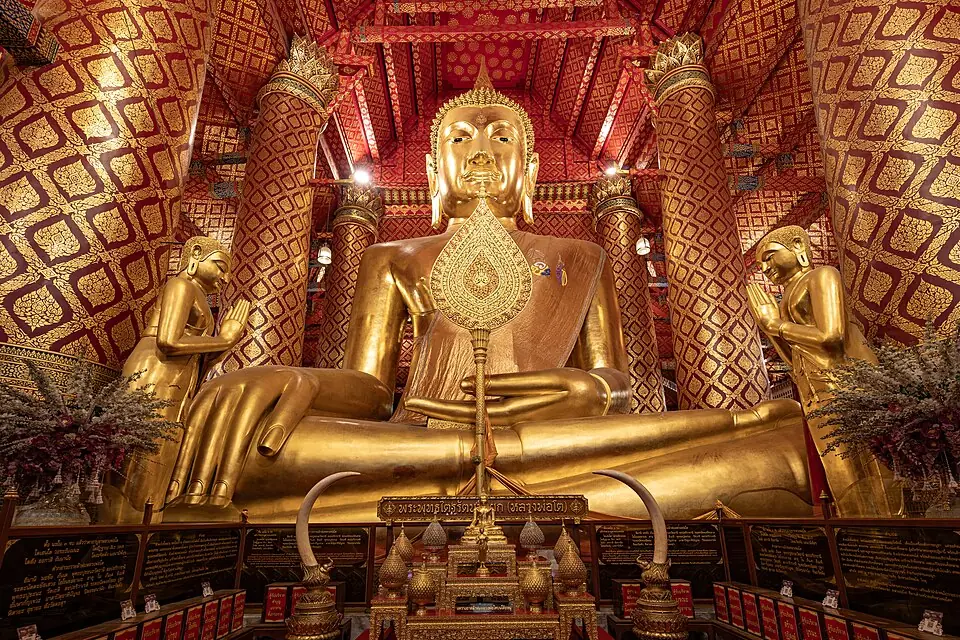
A royal temple where people come to pay respect to Luang Pho To (Phra Phuttha Trai Rattana Nayok), about 19 metres tall. It has a pier and the shrine of Chao Mae Soi Dok Mak, and is a popular stop for the tour boats that go around the island.
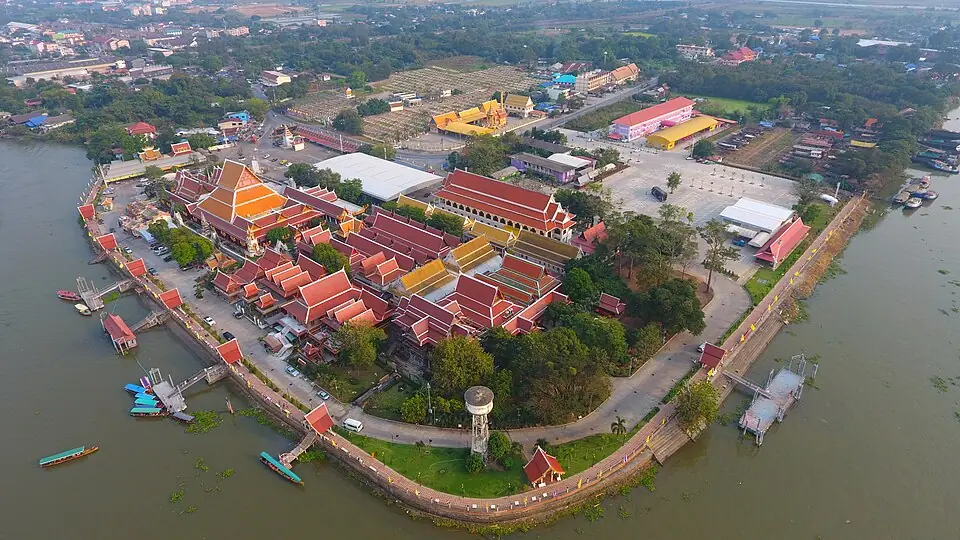
The temple of the riverside Chinese community
The Luang Prasoet Chronicle records that the temple's great Buddha image was made in 1324, 26 years before the founding of Ayutthaya. The Chinese call it Sam Po Kong, and tie the temple to the legend of Princess Soi Dok Mak. The Khlong Suan Phlu quarter around the temple was a Chinese community, close to the trading post of the Dutch East India Company and to the Japanese Village.
In late Ayutthaya the Chinese of the capital included merchants, craftsmen and people in royal service. King Taksin's father was a Teochew Chinese who worked as a tax collector, so a Chinese community like Khlong Suan Phlu was a world close to him.
The Chinese volunteers' camp and the Burmese iron chain
In December 1766 the court called on the Chinese to help defend the city. About 2,000 Chinese under Luang Aphai Phiphat set up camp in the abandoned Dutch trading post on Khlong Suan Phlu. In February 1767 the Burmese stretched an iron chain across the river, shutting in the fleet of Chinese junks, and then broke it. The Chinese camp held out for about a month before it fell in mid-March. Tradition has it that shortly before the city fell, tears flowed from Luang Pho To's eyes.
The force that broke out through the siege with Phraya Tak early in January 1767 included Chinese soldiers, and at Chanthaburi King Taksin obtained a large number of Chinese junks for the fleet he used to come back and recover the capital.
Paying respect to Luang Pho To
Wat Phanan Choeng is a royal temple where people come to worship all day long, especially at Chinese festivals. The great wihan houses Luang Pho To. There is the shrine of Chao Mae Soi Dok Mak by the river, and a pier where the tour boats that go around the island stop. South of the temple is Baan Hollanda, with its exhibition on the Dutch in Ayutthaya, and a little further on is the Japanese Village.
The Chinese in King Taksin's army
After the fall the Chinese were an important source of strength for King Taksin: in the force that broke out through the siege, which the chronicles call "Siamese and Chinese soldiers", and in the Chinese vanguard that stormed the Pho Sam Ton camp, where Suki died. Trade with China was also the main source of rice and revenue for Thonburi while the country was being rebuilt.
Wat Phanan Choeng is thus a good place to tell the story of the Chinese community in Ayutthaya, both before and after the war. On this site's evening trip the temple comes after the Portuguese Settlement. Arrive before the temple closes, at about 5:00 pm.
At Chinese New Year and on long holidays a great many people come to pay respect to Luang Pho To, and the car park fills up quickly. If you do not like crowds, come on a weekday or in the late afternoon.
Where historians still disagree
- Luang Pho To's tears before the fall: this is a story recorded in the temple's history, not an event that can be verified.
Visiting information
- Opening hours: 08:00–17:00 (as of 2025)
- Dress modestly: this is an active temple with monks and worshippers throughout the day.
- It gets crowded on holidays and during Chinese festivals, so allow extra time for parking.
- If you come on a boat tour, agree on how long the stop will be before you go ashore.
Opening hours and admission fees may change, so please check before you go.
Frequently asked questions
Is Wat Phanan Choeng connected with King Taksin?
There is no record of King Taksin having a direct connection with this temple. But the Khlong Suan Phlu quarter around it was a Chinese community where Chinese volunteers set up camp to fight the Burmese in the war of the fall, and the Chinese were an important source of strength for King Taksin.
How tall is Luang Pho To at Wat Phanan Choeng?
About 19 metres. The Chinese call it Sam Po Kong.
Last updated 13 November 2026