Wat Mahathat, Ayutthaya: the Buddha head in the tree roots, and the traces of the fall
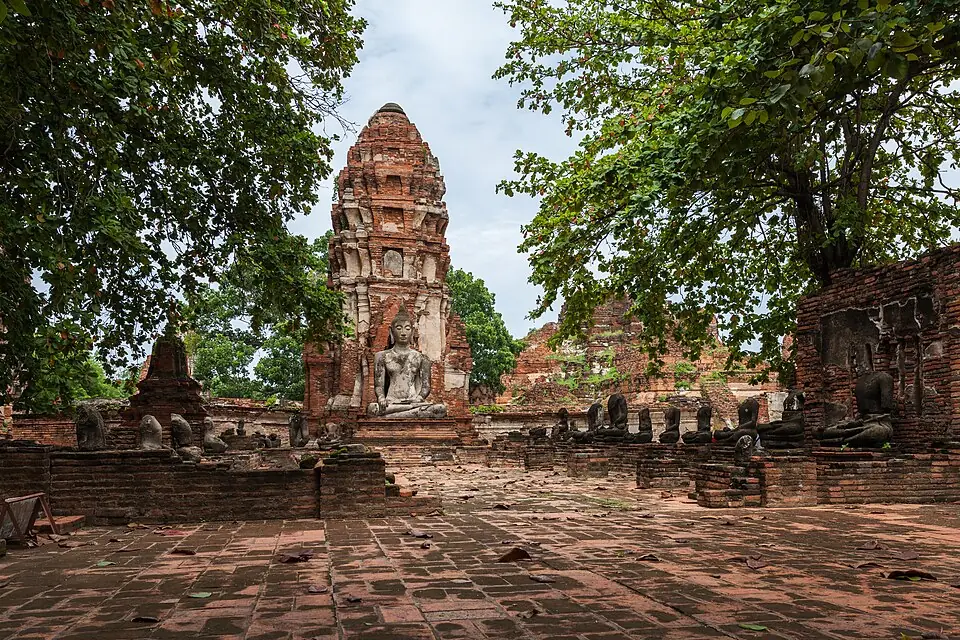
Wat Mahathat is a major temple in the centre of Ayutthaya's city island. It was once the seat of the Supreme Patriarch, and its main prang towered over the middle of the city. In the war of the second fall the temple was burned and many of its Buddha images were smashed and beheaded. The traces can still be seen all over the temple today, including the Buddha head in the roots of a bodhi tree that has become an emblem of Ayutthaya.
This place through the periods
The temple of the Supreme Patriarch of the town-dwelling (Gamavasi) order and the centre of Buddhism in the capital, its main prang towering over the middle of the city island. In the reign of King Borommakot, when the young Sin was growing up, Buddhism in Ayutthaya flourished to the point that Ceylon sent a mission to ask for monks to revive its ordination line.
During the Burmese siege great numbers of people fled into the temples in the middle of the city, and large temples like Wat Mahathat were a refuge for people short of food.
On the night the city fell the temple was burned. Many Buddha images were smashed and beheaded, and the main prang was damaged.
The temple was deserted after the fall. The main prang later collapsed, in the Rattanakosin period, leaving only its base.
The Buddha head in the roots of a bodhi tree is a sight known around the world. Sit or crouch down to take photographs, and do not stand higher than the head. A reliquary holding relics of the Buddha was found in the crypt under the prang in 1956.
The centre of Buddhism in the capital
Wat Mahathat was built in the early years of the capital, around 1374. Its main prang enshrined relics of the Buddha, and the temple was the seat of the Supreme Patriarch of the town-dwelling order. In the years when the young Sin was growing up, Buddhism in Ayutthaya flourished to the point that Ceylon sent an embassy to ask for monks to revive its ordination.
Later, as king at Thonburi, King Taksin gave great importance to collecting the Tripitaka and restoring the monastic order after the war. The sight of great temples like Wat Mahathat lying deserted after the fall was part of the loss that had to be made good.
When the city fell
On the night of 7 April 1767 Wat Mahathat was burned. Many Buddha images were smashed and beheaded, both in the search for valuables placed inside them and in the violence of war. Some scholars point out that part of the damage came later, from illicit digging for valuables in the deserted temple over the decades that followed.
The damaged main prang collapsed in the Rattanakosin period, leaving only the base you see today. Where the Buddha head in the roots of the bodhi tree came from is not known for certain. It is thought that a head left lying on the ground was slowly lifted and enclosed by the roots over many decades.
Visiting with respect
There are people waiting to take photographs at the head in the tree roots all day long. Sit or crouch so that you are lower than the head, and do not stand over it or point your feet towards it. Walk around the base of the main prang and the rows of headless Buddha images, then cross the road to Wat Ratchaburana, where a large hoard of gold objects was once found in the crypt of the prang.
Wat Mahathat after the fall
After the war Wat Mahathat was abandoned, like the other great temples on the city island. King Taksin did not restore the old city but set up his capital at Thonburi, and had Tripitaka texts collected from the provincial towns to be copied in order to restore the monastic order, because so many of the scriptures in the capital had been lost.
The ruins you see today have been through the fires of war, the removal of bricks for reuse in later times, and illicit digging for valuables. Some scholars therefore caution that not all the damage was done on the single night the city fell.
On this site's one-day trip, Wat Mahathat comes in the afternoon, after the Royal Palace and Wat Phra Si Sanphet. The combined ticket for the historic sites can be used. From Wat Phra Si Sanphet it is a few minutes by car, or about 15 minutes on foot.
Inside the temple, Fine Arts Department signs explain each point. Allow about 45 minutes to an hour, keep to the marked paths and do not climb on the ruined chedis.
Where historians still disagree
- Who destroyed the Buddha images: part of the damage was done on the night the city fell, but some scholars point out that illicit digging for valuables after the war also destroyed much of the site.
Visiting information
- Admission: Information updated December 2025: Thai visitors THB 10, foreign visitors THB 80, or a combined ticket for 7 sites in the Historical Park at THB 40 for Thai visitors and THB 300 for foreign visitors (subject to change).
- Dress modestly, with shoulders and knees covered.
- Photograph the head in the tree roots sitting or crouching, lower than the head.
- Go in the morning, when there are fewer people and the sun is not yet strong.
Opening hours and admission fees may change, so please check before you go.
Frequently asked questions
Which temple has the Buddha head in the tree roots?
Wat Mahathat, in the centre of Ayutthaya's city island.
When was Wat Mahathat destroyed?
In the second fall of Ayutthaya, on the night of 7 April 1767, with further damage from illicit digging for valuables in later times.
Last updated 13 November 2026