Home › Places › Wat Chaiwatthanaram
Wat Chaiwatthanaram: a riverside stronghold in the war of the fall
Wat Chaiwatthanaram stands on the west bank of the Chao Phraya River. Its Khmer-style main prang and the ring of meru towers around it make it one of the most beautiful temples in Ayutthaya, and a favourite place to watch the sunset. In the war of the second fall this temple was the Siamese stronghold on the south-west side. It held out against the Burmese for nine days before it fell, not long before the whole city passed into enemy hands.
This place through the periods
A large riverside temple built by King Prasat Thong in 1630. Its Khmer-style main prang is surrounded by smaller prangs and meru towers. It was a royal temple used for the court's ceremonies.
In the fighting from late 1766 to early 1767 the Siamese used this temple as a stronghold on the south-west side. Works based on the Burmese chronicles say the stronghold at Wat Chaiwatthanaram held out against the Burmese for nine days before it fell.
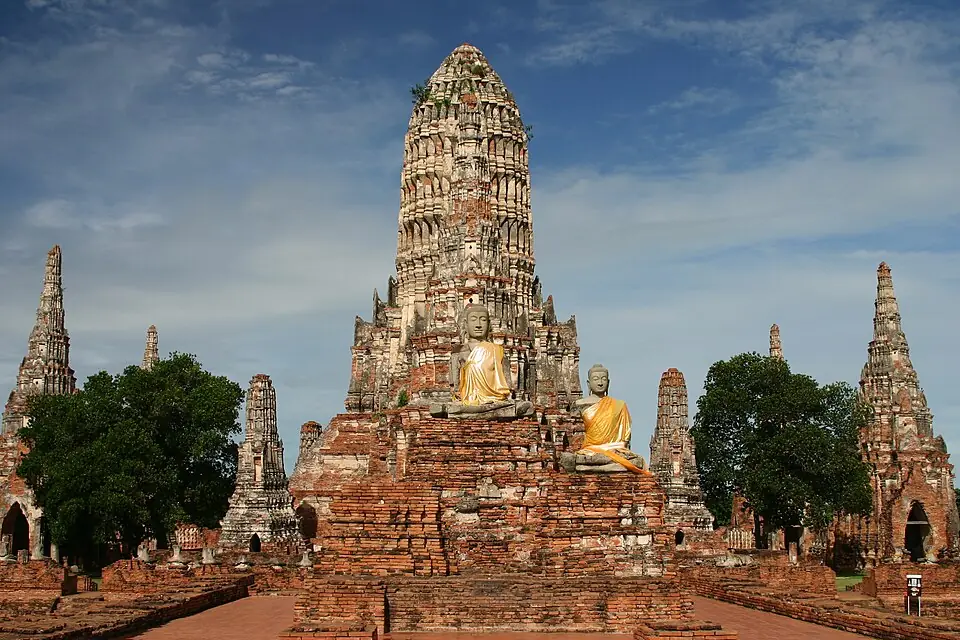
After the fall the temple was abandoned. The Buddha images in the meru towers had their heads destroyed, and the temple was dug over illicitly for valuables.
Through the Thonburi years and several reigns after, the temple remained deserted. The ruined prangs by the river became a landmark for passing boats.
The most popular place in Ayutthaya to watch the sunset over the Chao Phraya River. The Fine Arts Department restored it in the late 1980s and early 1990s.
A royal temple on the river
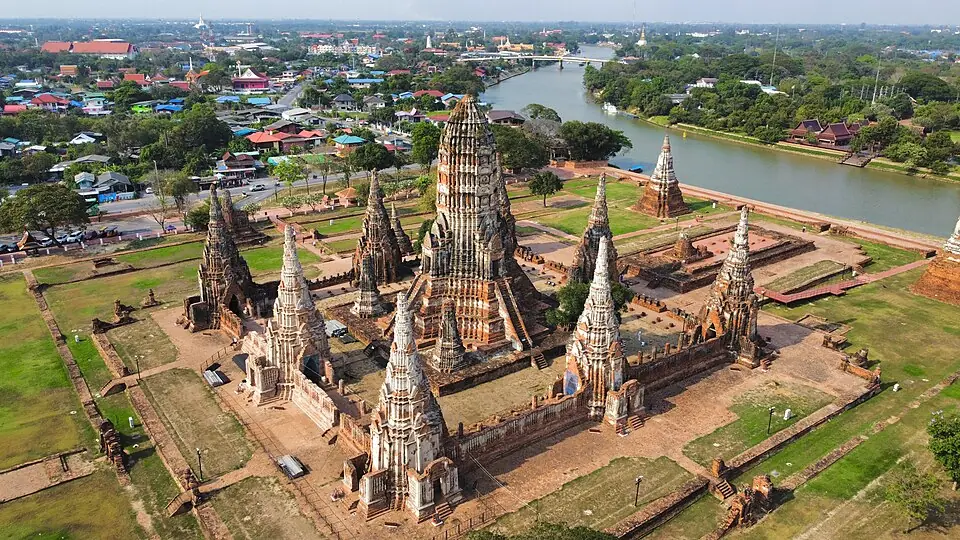
King Prasat Thong built Wat Chaiwatthanaram in 1630, on land said to have been his mother's home. The plan was inspired by Khmer art: the main prang is surrounded by four smaller prangs at the corners and eight meru towers, each housing crowned Buddha images. In late Ayutthaya it was still a royal temple that the court used for its ceremonies.
The stronghold on the south-west side
When the Burmese tightened the ring early in 1767, the Siamese set up strongholds in the large temples around the city. Wat Chaiwatthanaram, with its walls and solid brick buildings, was one of them. Works based on the Burmese chronicles say this stronghold held out against the Burmese for nine days before it fell, at about the same time as the Chinese camp at Khlong Suan Phlu and the camp at the Portuguese settlement. The outer line of defence south of the city was thus gone in March, leaving only the city wall to bear the attack until the night of 7 April.
By then Phraya Tak was already at Rayong, negotiating with the governor of Chanthaburi to join in recovering the country.
Watching the sunset
After the fall the temple lay deserted for a long time, and the Buddha images in the meru towers had their heads destroyed. The Fine Arts Department restored it in the late 1980s and early 1990s. Today it is the most popular place in Ayutthaya to watch the sunset. Come about an hour before sunset to walk around the gallery and choose your spot for photographs. When the authorities hold evening events, this temple is usually lit up.
Wat Chaiwatthanaram in King Taksin's story
The temple was built in the reign of King Prasat Thong, about a hundred years before King Taksin was born. In King Taksin's youth it was still an important royal temple on the river. When the war came, it became a stronghold outside the city, and when this stronghold fell in March 1767 there was almost nothing left of the city's southern line of defence.
After the war the temple lay abandoned for more than two hundred years, before the Fine Arts Department restored it and opened it to visitors. On this site's evening trip, Wat Chaiwatthanaram comes in the late-afternoon light, before dinner by the river on the same bank.
If you go during the province's annual fair, in some years there are light displays and evening performances at this temple. Check the schedule on this site's events page or in the province's announcements.
The temple is on the west bank of the Chao Phraya River, off the city island, so you have to drive round and cross a bridge. Allow about 10–15 minutes from the centre of the island.
Visiting information
- Admission: THB 10 for Thai visitors, THB 80 for foreign visitors, at Fine Arts Department rates (as of 2025–2026); combined tickets covering several sites are also available
- Opening hours may differ when evening events are held, so check before you go.
- Arrive about an hour before sunset to give yourself time to walk around and choose your photo angle.
- Dress modestly, and do not climb on the bases of the prangs or the meru towers.
Opening hours and admission fees may change, so please check before you go.
Frequently asked questions
When was Wat Chaiwatthanaram built?
In 1630, by King Prasat Thong.
What does Wat Chaiwatthanaram have to do with the fall of Ayutthaya?
It was the Siamese stronghold on the south-west side, and held out against the Burmese for nine days before it fell, according to works based on the Burmese chronicles.
Last updated 13 November 2026